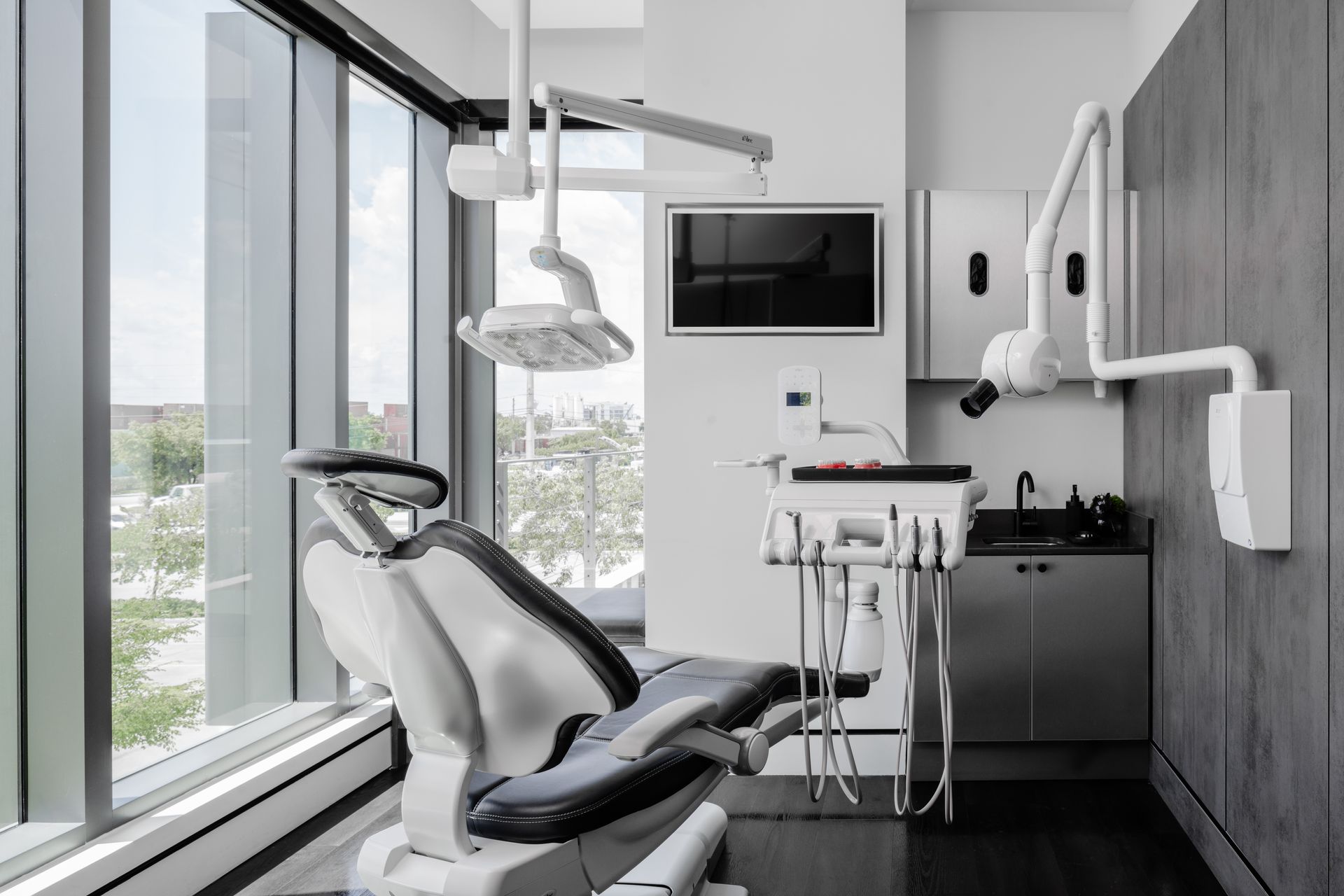
How Can Dental Bone Grafting in Miami, FL Prepare Your Jaw for Dental Implants?
Losing a tooth can affect more than your smile. When a tooth is missing, the jawbone in that area may gradually lose volume because it no longer receives the stimulation that normally comes from the tooth root. Over time, this bone loss can make certain tooth replacement options, particularly dental implants, more challenging. Dental bone grafting in Miami, FL may be recommended when additional bone volume is needed to support a future implant or improve the condition of an area affected by bone loss.
Bone grafting is a procedure designed to add bone or bone-like grafting material to an area where additional volume is needed. The graft provides a framework that can support the body's natural bone-forming process. Depending on the location and extent of bone loss, grafting may be performed before implant placement or, in selected cases, as part of a broader treatment plan.
For patients searching for dental bone grafting in Miami, FL, understanding why the procedure is recommended, what the treatment involves, how long healing may take, and how it relates to dental implants can make the decision-making process easier. A personalized examination is essential because the amount and location of available bone vary from patient to patient.
At Miamidentist4u, located at 1695 NW 110th Ave Ste 210, Miami, FL 33172, patients can discuss their tooth replacement needs and determine whether additional evaluation is appropriate before proceeding with implant treatment.
What Is Dental Bone Grafting?
Dental bone grafting is a procedure used to add grafting material to an area of the jaw where bone volume or density may be insufficient for a planned dental treatment.
The jawbone is a living tissue that continually changes in response to stimulation. Natural tooth roots help maintain bone by transmitting forces through the surrounding tissues. When a tooth is lost, that stimulation decreases, and the bone may gradually resorb.
This process can be especially important when a patient is considering a dental implant. An implant is placed into the jawbone, so the available bone must be carefully evaluated before treatment.
A bone graft does not simply act as a permanent replacement for the missing bone. Instead, the grafting material can provide a structure that supports new bone formation and remodeling. The specific material and technique used depend on the patient's needs and the treatment area.
Why Is Dental Bone Grafting in Miami, FL Recommended?
The most common reason for dental bone grafting is insufficient bone for planned dental implant treatment. However, bone loss can have several causes.
A tooth that has been missing for an extended period may leave an area with reduced bone volume. Advanced periodontal disease can also affect the tissues supporting the teeth and contribute to bone loss. Trauma, infection, tooth removal, or certain anatomical characteristics may also influence the amount of bone available.
Consider a patient who lost a molar several years ago and is now interested in replacing it with a dental implant. During the evaluation, the dentist may find that the ridge has become narrower or shorter than it was when the tooth was present. If there is not enough bone to safely support the planned implant, a grafting procedure may be considered as part of the treatment plan.
This does not mean that every patient with a missing tooth needs a bone graft. The recommendation depends on diagnostic findings and the requirements of the planned restoration.
Bone Grafting for Dental Implants in Miami
Bone Grafting for Dental Implants in Miami is often discussed as part of comprehensive implant planning. Dental implants require adequate bone support because the implant is designed to function within the jaw.
Before implant placement, a dental professional may evaluate the width, height, density, and shape of the available bone. Imaging can help determine whether the existing anatomy is appropriate for the proposed implant position.
If the available bone is insufficient, grafting may be recommended. The objective is to create a more suitable foundation for the implant rather than placing an implant into an area that does not provide adequate support.
The timing can vary. Some patients may need to heal after grafting before the implant is placed. In other situations, implant placement and grafting may be performed during the same treatment phase. The appropriate approach depends on the amount of bone available, the location of the defect, and the type of implant treatment being considered.
What Causes Jawbone Loss After Tooth Loss?
Bone loss following tooth loss is a natural biological process. When a tooth root is no longer present, the jawbone no longer receives the same functional stimulation.
The body gradually remodels the area, which can result in a reduction in ridge width and height. The extent of this change varies according to several factors, including how long the tooth has been missing and the condition of the surrounding tissues.
Periodontal disease can also contribute to bone loss. Gum disease affects the tissues that support teeth and, when advanced, can damage the bone surrounding affected teeth.
Other factors may include trauma, infection, developmental anatomy, and the condition of the extraction site.
This is why dental implant planning often involves more than simply selecting an implant size. The dentist must consider the underlying anatomy and how the implant will relate to the surrounding bone and tissues.
Bone Graft for Missing Teeth in Miami
Bone Graft for Missing Teeth in Miami may be considered when tooth loss has resulted in inadequate bone volume for a planned restoration.
A missing tooth does not necessarily mean that grafting is required. Some patients naturally retain sufficient bone after extraction, while others experience more significant resorption.
For example, imagine two patients who each lost a premolar several years ago. One may still have enough ridge width and height for implant placement, while the other may have experienced more extensive bone resorption. Their treatment plans could therefore be different even though they have the same type of missing tooth.
The purpose of the evaluation is to identify these anatomical differences before treatment begins.
A dental professional can assess the missing-tooth area and explain whether grafting is recommended, whether an implant can potentially be placed without grafting, or whether another tooth replacement option may be more appropriate.
What Types of Dental Bone Grafts Are Used?
Several types of grafting materials can be used in dentistry. The choice depends on the clinical situation, the location of the graft, the amount of bone needed, and the treatment objectives.
Some graft materials are derived from the patient's own bone. Other materials may come from screened donor sources or animal-derived sources that have been specially processed for medical use. Synthetic grafting materials are also available.
The important consideration is not simply the name of the material. The dentist must determine which grafting approach is appropriate for the specific defect and treatment plan.
Patients should feel comfortable asking what material is being recommended, why it is appropriate for their case, and how the graft fits into the overall plan for tooth replacement.
What Happens During a Dental Bone Grafting Procedure?
The exact process depends on the location and extent of bone loss.
Before treatment, the dentist evaluates the area and determines the appropriate grafting approach. Diagnostic imaging may be used to assess the underlying anatomy and plan the procedure.
During the procedure, the treatment area is anesthetized. The dentist accesses the area requiring additional bone volume and places the selected grafting material. Depending on the technique, a protective membrane may also be used to help stabilize the graft and support the healing process.
The site is then closed appropriately, and postoperative instructions are provided.
The procedure itself may not be the longest part of the overall treatment process. Healing and maturation of the graft are important because the jaw needs time to develop a stable foundation before certain implant procedures can proceed.
How Long Does a Dental Bone Graft Take to Heal?
Healing time varies significantly from one patient to another. The size and location of the graft, the patient's oral health, the type of grafting procedure, and the planned implant treatment can all affect the timeline.
Some grafting procedures may require several months of healing before implant placement. Smaller grafts or certain situations may involve a different schedule.
Patients should not judge graft success simply by whether the gum tissue appears healed on the surface. Bone remodeling occurs beneath the gum and requires time.
Follow-up appointments allow the dental team to evaluate healing and determine when the area is ready for the next stage of treatment.
Is Dental Bone Grafting Painful?
Patients commonly worry about pain associated with bone grafting. The procedure itself is performed with local anesthesia, so the treatment area is numbed during the procedure.
Afterward, some soreness, swelling, tenderness, or sensitivity can occur as the tissues recover. The amount of discomfort varies depending on the extent of the procedure and the individual patient.
Postoperative instructions are important. Patients should follow the guidance provided by their dental professional regarding oral hygiene, eating, physical activity, medication, and care of the surgical area.
If discomfort becomes unusually severe, continues to worsen, or is accompanied by other concerning symptoms, the dental office should be contacted.
What Can You Eat After a Dental Bone Graft?
Dietary recommendations depend on the specific procedure and location of the graft. In general, patients may be advised to choose softer foods that require minimal chewing during the initial recovery period.
The treated area should be protected from unnecessary pressure or trauma. Extremely hard, crunchy, or difficult-to-chew foods may be inappropriate during the early healing stage.
Patients should also follow any instructions concerning hot foods and beverages, oral rinsing, and chewing on the treated side.
Good nutrition and adequate hydration are important during healing, so the goal is usually to choose comfortable foods while protecting the surgical area.
How Does Bone Grafting Relate to Dental Implants?
Dental implants are designed to replace missing tooth roots and support dental restorations. Because an implant is anchored in the jawbone, the condition of the bone is a major consideration during treatment planning.
If there is insufficient bone in the proposed implant location, placing the implant may not be appropriate without additional treatment.
This is where Bone Grafting for Dental Implants in Miami can become relevant. By increasing available bone volume in a carefully selected case, grafting may help create a more suitable foundation for future implant placement.
However, grafting is not a guarantee that an implant will be appropriate or successful. Implant candidacy involves several factors, including oral health, bone anatomy, gum condition, overall treatment needs, and the patient's individual circumstances.
Can You Get a Dental Implant Without a Bone Graft?
Yes, some patients can receive a dental implant without bone grafting.
Whether grafting is necessary depends on the amount and quality of bone available at the proposed implant site. Some patients maintain sufficient bone volume after tooth loss, particularly when treatment is planned at an appropriate time.
Other patients may have adequate bone in some dimensions but not others. For example, there may be enough vertical bone height but insufficient ridge width.
An evaluation is therefore more reliable than assuming that a bone graft will or will not be necessary based solely on how long a tooth has been missing.
What Are the Benefits of Bone Grafting?
The primary purpose of dental bone grafting is to improve the foundation available for planned dental treatment.
For appropriate patients, grafting may help:
- Increase bone volume in a deficient area
- Support planned dental implant placement
- Address bone loss associated with missing teeth
- Improve the anatomy of a tooth replacement site
- Create a more suitable foundation for certain restorative treatments
The benefits depend on the individual clinical situation. Bone grafting is not primarily performed for cosmetic reasons alone; it is generally considered when the underlying bone anatomy needs to be improved for a specific treatment objective.
What Happens If You Do Not Have Enough Bone for an Implant?
When there is insufficient bone for a planned implant, several options may be discussed depending on the patient's anatomy and goals.
A dentist may recommend bone grafting to increase available bone volume. In some cases, a different implant position or treatment approach may be considered.
For patients who are not candidates for grafting or who prefer not to undergo the procedure, alternative tooth replacement options may be available. These can include bridges or removable dental prostheses, depending on the location of the missing tooth and the surrounding teeth.
The right choice should be based on an individualized evaluation rather than a one-size-fits-all recommendation.
How Do You Know If You Need a Dental Bone Graft?
You cannot reliably determine whether you need a bone graft based only on the appearance of your gums or the number of years a tooth has been missing.
A dental examination and appropriate imaging can provide information about the underlying jawbone. The dentist can evaluate the area where the tooth is missing and determine whether the available bone meets the requirements of the proposed treatment.
For example, a patient may believe that an implant will require a bone graft simply because the tooth was lost several years ago. Another patient may assume that a graft is unnecessary because the gum looks healthy. Neither assumption can replace a professional assessment of the underlying bone.
At Miamidentist4u, patients can discuss their missing tooth, implant goals, and treatment concerns during an individualized dental evaluation.
What Should You Ask Before Getting a Bone Graft?
Before undergoing dental bone grafting, patients may want to ask several practical questions.
It can be useful to understand why the graft is recommended, how much bone is currently available, what type of grafting material will be used, and whether additional procedures may be needed.
Patients should also ask about expected healing time, postoperative care, possible complications, and how the graft fits into the larger treatment plan.
If an implant is planned, ask when the implant is expected to be placed and whether additional imaging or evaluation will be necessary before that stage.
Clear communication helps patients understand the treatment instead of viewing bone grafting as an isolated procedure.
Dental Bone Grafting in Miami, FL: Choosing the Right Next Step
If you have a missing tooth and are considering a dental implant, the first step is usually an evaluation of the area rather than automatically scheduling a graft.
Dental bone grafting in Miami, FL may be appropriate when bone loss has created an anatomical limitation for planned implant treatment. For another patient, the available bone may already be sufficient.
The best treatment plan depends on your specific dental anatomy, oral health, treatment goals, and the condition of the missing-tooth area.
Miamidentist4u serves patients at 1695 NW 110th Ave Ste 210, Miami, FL 33172, where patients can discuss options for missing teeth and determine whether further evaluation for bone grafting or implant treatment is appropriate.
Frequently Asked Questions
What is dental bone grafting in Miami, FL?
Dental bone grafting is a procedure used to add grafting material to an area of the jaw where additional bone volume may be needed. It is commonly considered when bone loss affects the foundation needed for planned dental implant treatment.
Is bone grafting always required before a dental implant?
No. Some patients have enough bone to support an implant without grafting. A dental examination and appropriate imaging can determine whether the available bone is sufficient for the proposed implant position.
How long does a dental bone graft take to heal?
Healing time varies depending on the size and location of the graft, the patient's oral health, and the treatment plan. Some cases require several months of healing before an implant can be placed.
Is dental bone grafting painful?
The procedure is performed with anesthesia to numb the treatment area. Some soreness, swelling, or tenderness can occur afterward. Patients should follow their dentist's postoperative instructions and report unusually severe or worsening symptoms.
Can bone grafting help if I have had a missing tooth for years?
It may. A missing tooth can be associated with gradual jawbone resorption. If there is insufficient bone for a planned implant, grafting may be considered to improve the available bone. The need for grafting can only be determined through an individual evaluation.
How do I know if I need a bone graft for a dental implant?
A dentist can assess the proposed implant site using a clinical examination and appropriate imaging. The evaluation can show the available bone volume and help determine whether grafting, implant placement without grafting, or another treatment option is appropriate.